On a stock order, the money moves after the unit exists. On a custom order it moves before: the drawing, the sample and the tooling are all paid for while nothing saleable has been built. That is the part of a hotel lighting package procurement teams find hardest to place on the quotation.
This guide is for the procurement leads and owners' representatives who set those orders up. It covers what is normally chargeable at each stage, what a paid sample buys, and how to sequence the milestones so the project does not pay twice.
 |
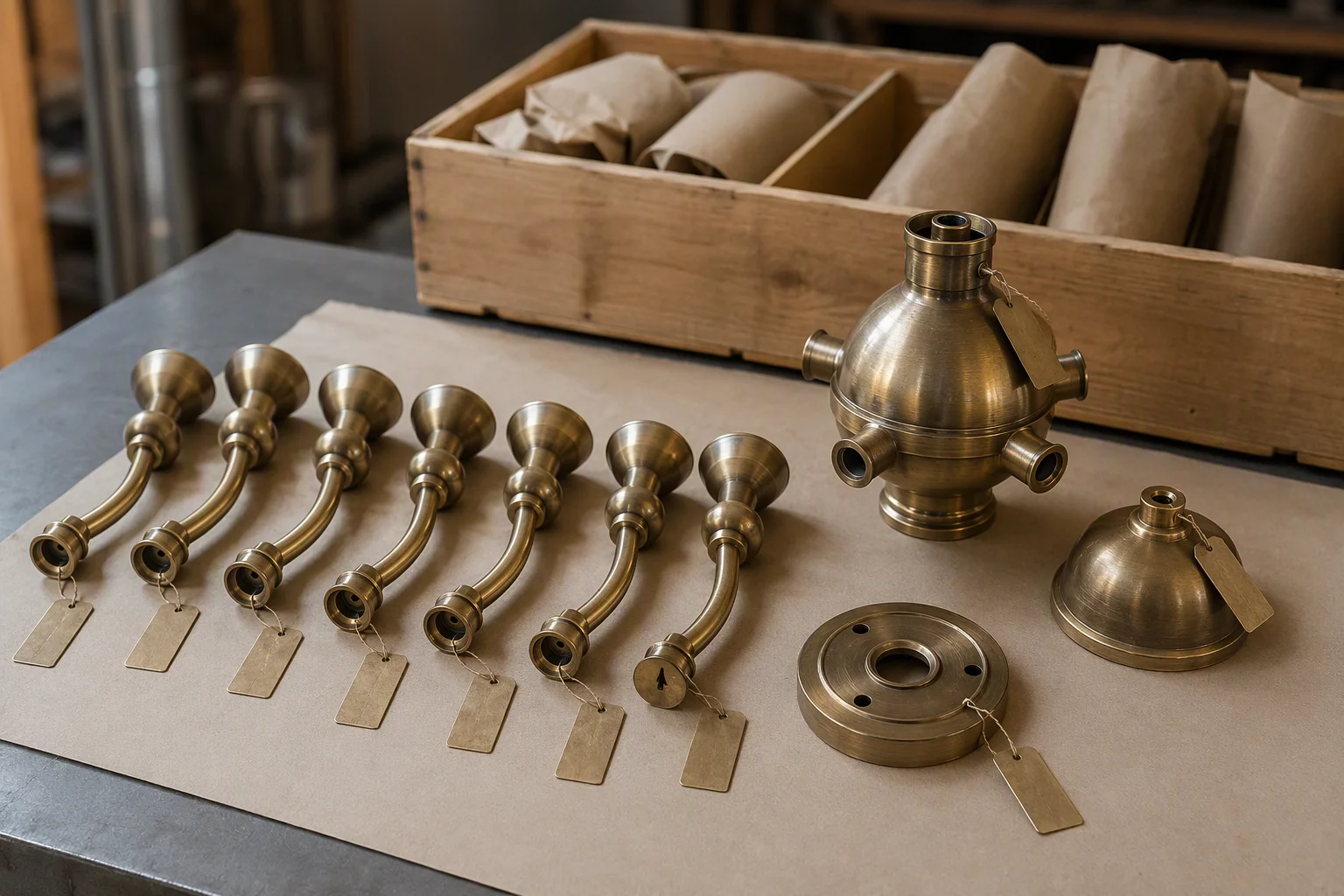
| The approval sample is the artefact the order is measured against. |
Why a custom order carries costs a stock order does not
A catalogue fixture has already been designed, tooled and sampled by the maker, at the maker's risk, before anybody buys it; all of that sits inside the unit price.
A custom order reverses it. The project needs a shape that is in nobody's range, so development is paid for by this order alone. Three things fall into that category, each a separate commercial event with its own approval and its own place in the cash flow: the drawing that turns a specification into something a workshop can build, the sample that proves the drawing, and the tooling that makes the approved shape repeatable.
None of those charges is unusual. Trouble starts when they are bundled into one figure, because a lump sum conceals that the sample is paid before the drawing is frozen, and the tooling before production is released.
What a paid sample is actually buying
An approval sample is not a preview and not a marketing photograph. It is one unit, built to the approved drawing in the approved finish, and it does three jobs.
- It tests what a drawing cannot show. Arm geometry, how a shade behaves under real light, how a finish reads across a curved section and the reach of the switch are settled in the hand.
- It becomes the reference. Once signed, it is what production is compared against and what a later phase is matched to.
- It converts a discussion into a decision. A signed sample ends the argument about whether the fitting looks right, which would otherwise reappear at handover.
That is why a sample is normally chargeable: it consumes design time, materials and a production slot that would otherwise be building saleable units. On many projects the charge is credited back against the order, which is worth confirming in writing rather than assuming.
What is normally chargeable, stage by stage
Read the table as a cash-flow map rather than a price list. What matters at each stage is who is exposed, and whether the charge moves to the order or stays with the project.
| Stage | What it covers | Normally chargeable? | What it protects |
|---|---|---|---|
| Shop drawing | Specification turned into a buildable drawing with tolerances | Often absorbed; separate when the design belongs to the project | The dimension at the fixing |
| Approval sample | One unit in the approved drawing and finish | Usually charged; commonly credited against the order | Finish tone, geometry, shade behaviour |
| Second sample round | A rebuild after the drawing or finish changes | Charged again; the first sample is superseded | That the revised drawing was built |
| Tooling | Moulds, jigs and frames outside standard diameters | Separate, or amortised across the units | The profile that repeats the shape |
| Production | Units built to the retained sample | Unit price | The delivered package |
| Packing and documents | Labelling, transit protection, export paperwork | Per the agreed trade term | Arrival condition and paper trail |
What makes a sample approvable the first time
Sample rounds are sequential: each is built after the previous one is reviewed, so every extra round pushes the production slot rather than running beside it. Most repeat rounds follow an approval that was never fully decided.
- Freeze the drawing first. A sample built against an open drawing tests nothing.
- Approve the finish physically. Judge it against a retained sample in the light of the room, not on a screen.
- Check the interfaces. Switch reach, cable exit, mounting plate and driver access are what the room has to live with.
- See it beside its neighbours. A fixture approved alone can still look like a different job beside the rest of the property.
- Name one approver and a date. Approval by committee with no signatory is the commonest reason a sample sits unconfirmed while the schedule runs.
A sample is expensive next to the drawing it should have been checked against, and cheap next to the change order it prevents.
If the design also changes a control, a charging function or a mounting height, settle those before the sample is built: a change to a part means a new sample, a change to a drawing does not.
Tooling, seen from the payment schedule
Tooling in decorative lighting usually means cast or extruded parts, forming jigs, and frames outside standard diameters. It is a one-off cost attached to one configuration, invoiced at a fixed point in the schedule.
Two questions keep it predictable, and both are financial. Is the tool charged as its own line or spread across the unit price, and if it is spread, what does the unit price become once the tool has been paid for? And when is it invoiced? Tooling is normally payable before production is released, so the project funds the shape before it funds the units.
Where a second phase may order the same line, record which tools belong to this configuration and when their cost was covered. That note answers whether a repeat quotation is charging for the same tool twice.
Payment milestones in a custom order
A custom order carries more financial exposure for both sides than a stock order, and the milestone structure is how that exposure is shared. In outline it follows the risk: something when the order is placed and the production slot is committed, something before production is released to cover materials and tooling, and the balance as the goods are ready or shipped, against documents.
Three habits protect the buyer's position.
- Tie each milestone to an event, not a date. On approval of the sample, on release to production and against shipping documents are checkable; a calendar date is not.
- Name what the payment releases. A production milestone is the buyer's last point of control before materials are consumed.
- Keep documents in the balance stage. If the final payment is released against a document set, the packing list, inspection record and agreed certificates arrive before the money does.
It also helps to know which stage a change lands in. A revision approved after production is released is not a revision; it is a change order, and it will be priced as one.
What to keep on file once the sample is approved
The commercial value of an approval is realised only if the evidence survives the people who made it. Three records belong with the order file.
- The approved sample, or a photographic record with the drawing version it was built against. Without the version number, a finish dispute has no anchor.
- The finish reference: a physical tile for every finish used across the property, dated and identified by line.
- The commercial schedule: what was charged, what was credited, and which tools belong to this configuration.
It is the difference between a second phase that repeats cleanly and one that renegotiates the same development twice.
FAQ
Is a hotel lighting sample always charged for?
Not always, but it is normal on custom work. Development consumes design time, materials and a production slot, so a supplier who samples free is absorbing that cost elsewhere or pricing it into the units.
Is the sample charge refunded when the order follows?
Commonly it is credited against the production order rather than refunded, and the distinction matters: a credit reduces the balance, while a refund would leave the sample cost standing.
Should tooling be a separate line or amortised into the unit price?
Both are workable. A separate line keeps the unit price comparable across suppliers and makes a repeat order easier to price honestly.
How many sample rounds should a project allow for?
Budget for one and treat any further round as a schedule event. The number is driven by how many decisions are still open when the drawing is issued.
Can the sample stage be skipped to save time?
Only where the fixture is a catalogue item taken as it is. On a custom line, skipping the sample moves the same verification to the site, where a wrong finish costs far more to correct.
The takeaway
A custom lighting order pays for development before it pays for product, and the drawing, the sample and the tooling are three separate events rather than one lump. Treat the sample as a purchase that earns its cost back by ending the argument early. Then tie every milestone to an event rather than a date, record what was charged and what was credited, and keep the approved sample and finish references with the order file.
Zerouno Lighting (ZeroUNO) manufactures hospitality decorative lighting in Zhongshan, China, including bespoke fixtures built to project drawings and approved samples. Founded in 2013, the company supplies single piece samples for approval and works to a 25 to 35 day production window on custom pieces. Learn more at zerounolighting.com.
About the author
Sonny Yu is Sales Manager at Zerouno Lighting in Zhongshan. He works with hotel owners, designers and procurement teams through the commercial stages of a bespoke lighting package, from the first sample to the final payment documents.



没有评论:
发表评论