Every hotel lighting package makes the same assumption: that when a fitting fails, a replacement will be available. It usually is, for the first year or two. The trouble starts when the same fitting fails in year four and the part that failed is the one nobody thought to order a spare of.
Spare parts are a procurement decision, not a stores decision. This guide is for the people who can still influence the order: the project team, the procurement lead and the consultant signing off the schedule. It covers how to tier a spare list, what to tie to the purchase order, and what the property should be left holding when the fit-out closes.
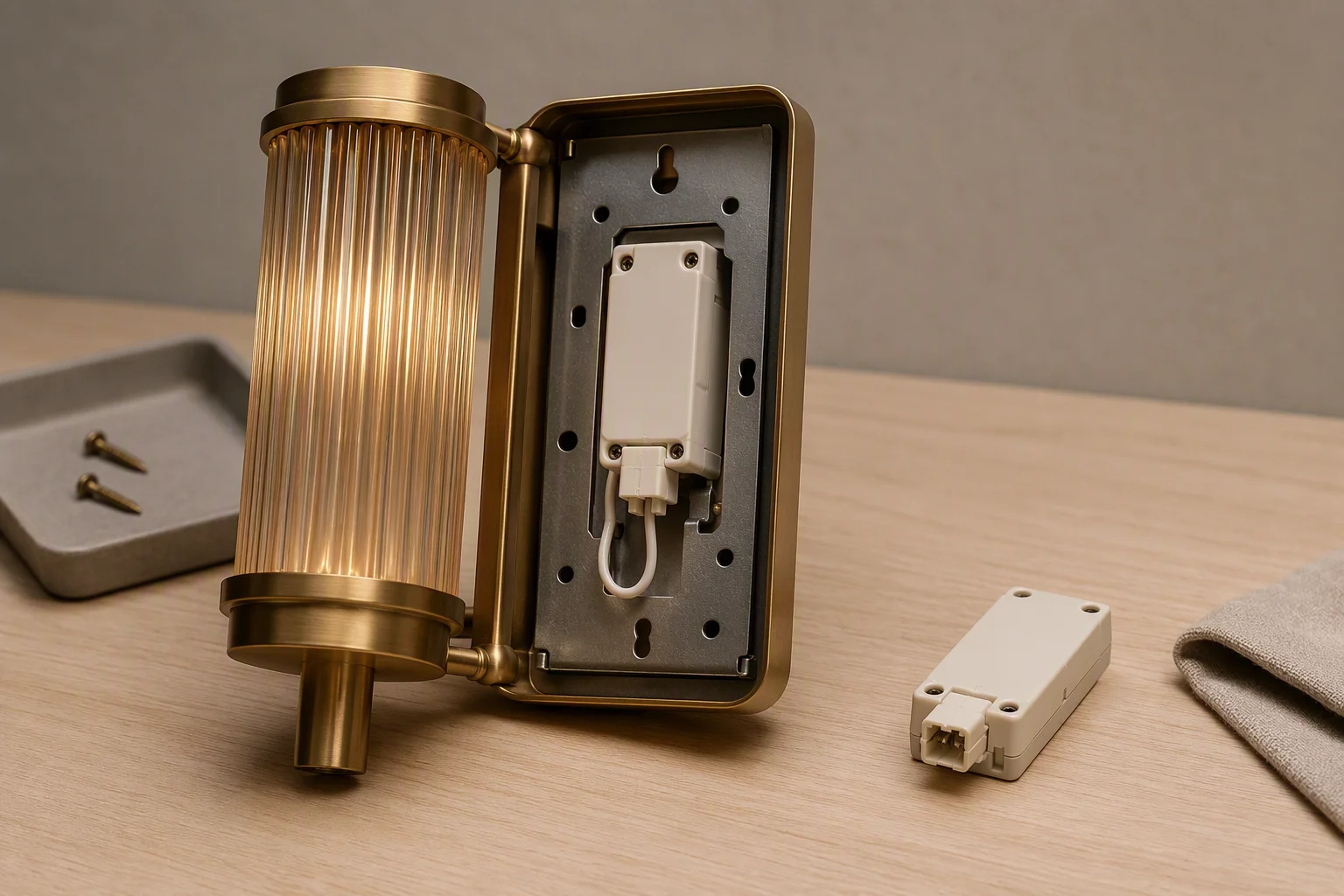 |
| A fixture that opens and re-drives on site turns a spare part into a maintenance task rather than a refit. |
Why spares belong in the order, not in the store
A store cupboard is where spares end up, not where they are chosen. By the time the hotel opens, the order is closed, the tooling has moved on and the supplier's batch of drivers may already have been superseded. Buying later also means buying alone: a single line, at whatever that line's minimum is, with a finish match that has to be argued rather than specified.
Attaching the list to the order removes all three problems at once. The parts are made in the same run, from the same batch, on a document that already exists. It is the cheapest moment in the project to decide what a fixture's failure will cost.
Three questions decide every line on the list
Most spare lists fail because they are written as a shopping list rather than a risk list. Three questions, asked of every fixture in the package, separate the lines that matter from the lines that pad the order.
- If this part fails, does the room go out of service? If the answer is no, it belongs low on the list. If it is yes, it needs to be in the property before opening.
- Can it be sourced locally at short notice? A standard fastener can come from any contractor. A driver programmed for a specific dimming protocol cannot.
- How long would a re-order take? A part on a made-to-order cycle is a different risk from an item sitting on a shelf.
The three answers rarely agree, and that is the point. An inexpensive part with a long re-order lead time is a bigger exposure than an expensive one available next day.
Building the tiers: what to hold, and where
Grouping the answers produces four tiers. Each one names who holds the stock and what triggers a replacement.
| Tier | What sits in it | Who normally holds it |
|---|---|---|
| A. Service-critical | The part that stops the fixture working, with no local equivalent: driver, control module, connector | The property, in its own store |
| B. Visible and cosmetic | Diffusers, shades, lenses and trims a guest would notice if the finish stopped matching | The property or the fit-out contractor, per fixture type |
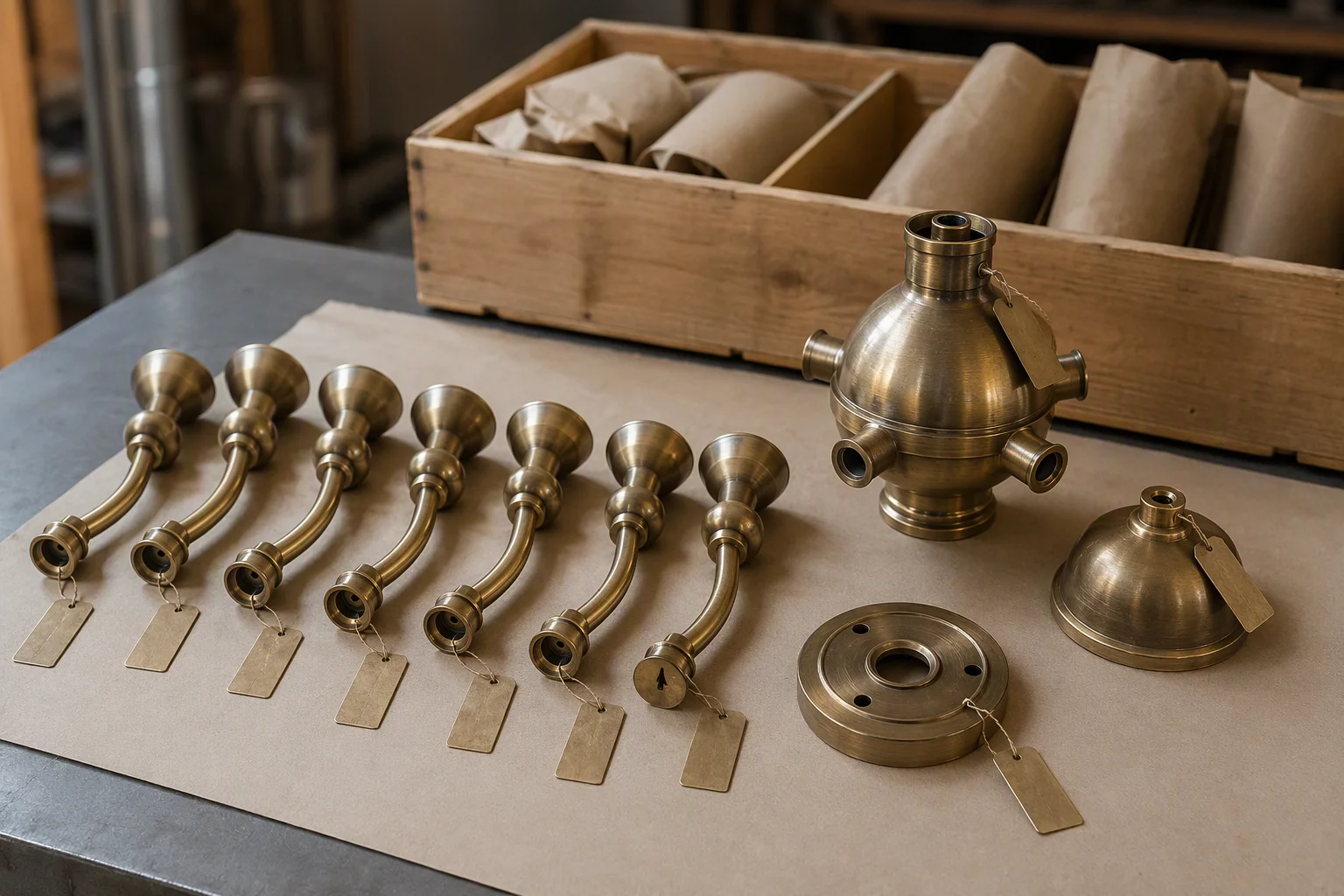
| C. Bespoke and structural | Cast, machined or fabricated parts unique to the design | The manufacturer, against the project reference |
| D. Consumable and universal | Fixings, gaskets, cable and fasteners common to the range | Locally, by the electrical contractor maintaining the property |
A spare part is not an insurance policy. It is a decision about which failure the property can absorb without closing a room.
Designing access in, so a spare can actually be fitted
A spare in a box is useless if the fixture cannot be opened in place. Serviceability is settled at the drawing stage by whoever reviews the submittal, and it is not a question a supplier will raise on their own.
Ask where the driver sits in the assembly, and how it is reached without removing the fitting from the wall. Ask whether the fixture can be serviced with the room occupied, or whether it needs the wall opened, a lift booked and the ceiling made good afterwards. Ask how a unit is isolated, and whether the control gear is reachable from below or above.
On wall-mounted and headboard-integrated fittings, the practical difference is between a task measured in minutes and one measured in days. A driver behind a removable backplate is a maintenance item. The same driver sealed inside a closed carcass is a refurbishment. The two versions often cost the same to build; the difference is which question was asked before the order.
The obsolescence trap: batch, finish and discontinued parts
Two failure modes arrive together, years after handover. The first is a part that is no longer made. The second is a part that is still made, but in a finish or a colour appearance that no longer matches the fittings already installed.
Both are managed on the order, not afterwards. Keep a physical finish reference panel approved at sample stage and hold it with the project record rather than a photograph. Name the driver and control gear by manufacturer reference where the project allows, so a later re-order has something to match against. Where a component is likely to be re-sourced, ask what happens to consistency across production batches.
None of this prevents change. It makes the change discussable, which is the difference between a matched replacement and a visible patch along a corridor of identical fittings.
What to attach to the purchase order
The spare list works when it travels with the order as a numbered schedule. Seven lines are usually enough.
- The tier for each line, and how many the property is expected to hold.
- The fixture type and drawing number each part serves.
- The manufacturer reference for drivers and control gear.
- The finish or colour reference the part must match.
- Which spares ship with the main consignment and which stay with the supplier.
- How spares are packed and labelled, so a part is identifiable in a store cupboard years later.
- What the warranty covers on a part fitted later, and what it does not.
After practical completion: the record the property keeps
The last deliverable is not a spare. It is the record that tells a future maintenance team what the part is, which fixture it belongs to and who to ask. A box of components with no schedule attached is a box that gets thrown out during a store clear-out.
Hand over a schedule keyed to the drawing set, one contact for re-orders, and a note of the spares already held. The property's team will change several times across the life of the hotel. The record is what survives the change.
FAQ
How many spare fixtures should a project order?
That is a commercial decision for the project team, and it scales with the number of identical fixtures and how visible a mismatch would be. The useful rule is to agree it before the order, not after a failure.
Should spares ship with the main consignment?
Service-critical parts generally do, so the property holds them from opening. Bespoke structural parts are better kept with the manufacturer until needed, because they are awkward to store and rarely fail early.
Can a later re-order match the original finish?
It can, if a physical reference panel was approved and kept. A photograph and a colour name are not enough to match a plated or aged finish across a gap of years.
Who pays for a part fitted under warranty?
Part and labour are usually treated separately, and the boundary belongs in the warranty terms rather than in a conversation after the event. Ask for it in writing at order stage.
Do spare parts need their own labelling?
Yes. A part that cannot be identified from its packaging is effectively lost the first time the store is reorganised. Put the labelling requirement on the packing specification.
The takeaway
Spare parts cost least at the moment the order is placed and most at the moment a fitting fails. Decide the tiers before the order closes, design the access so the part can be fitted in place, and hand over a schedule the property can still read in five years. The aim is not to stock everything. It is to know in advance which failure you have chosen not to be stopped by.
Zerouno Lighting (ZeroUNO) manufactures hospitality decorative lighting in Zhongshan, China, and has built project and custom fixtures since 2013. Custom enquiries normally begin with a one-piece sample against the drawing, with made-to-order work typically running 25 to 35 days once the sample is approved. Learn more at zerounolighting.com.
About the author
Sonny Yu is Sales Manager at Zerouno Lighting, working with designers, contractors and procurement teams on hospitality lighting packages. Much of his week goes on the parts of a package that only matter later: the schedule reference, the finish panel and the spare nobody planned for.