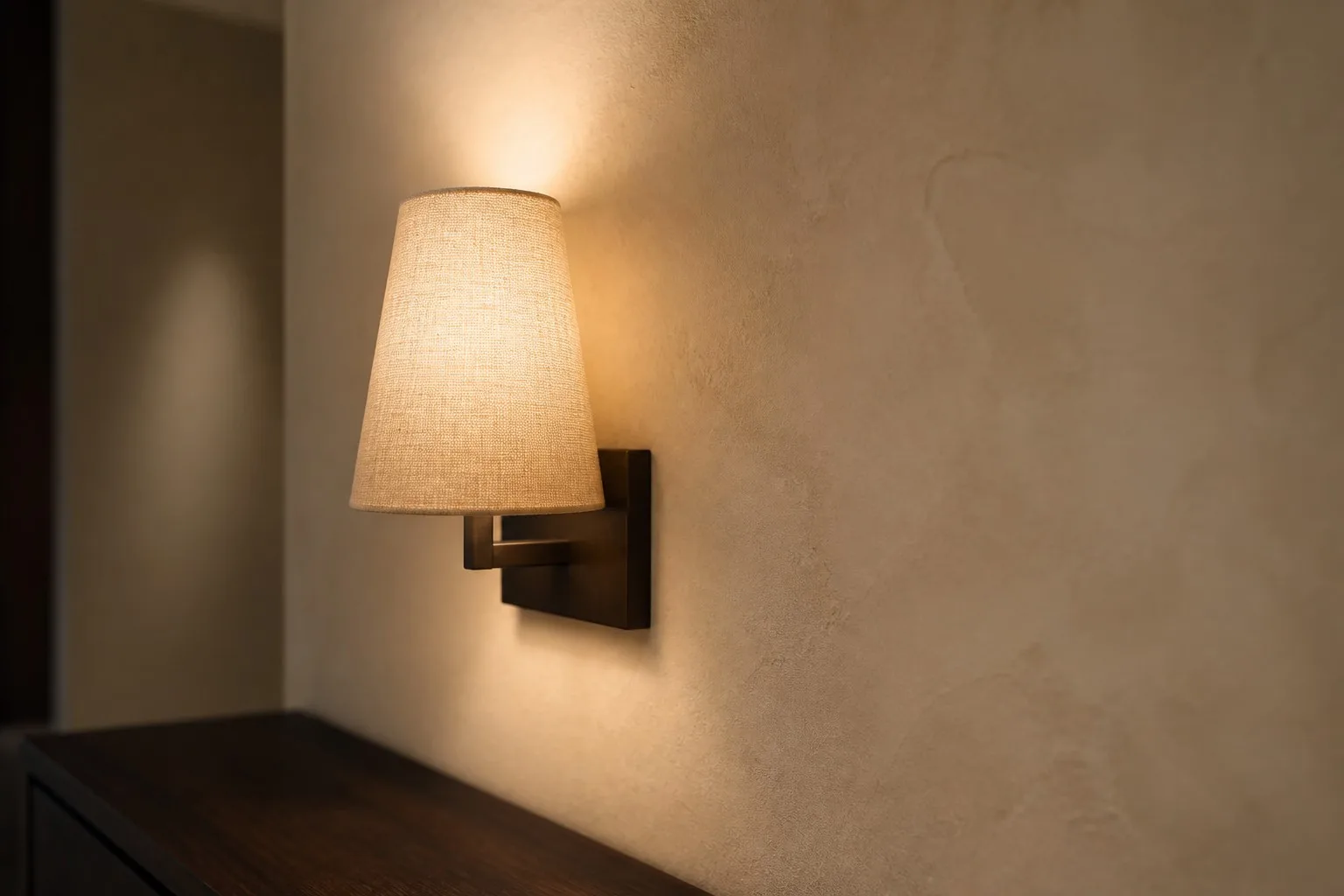
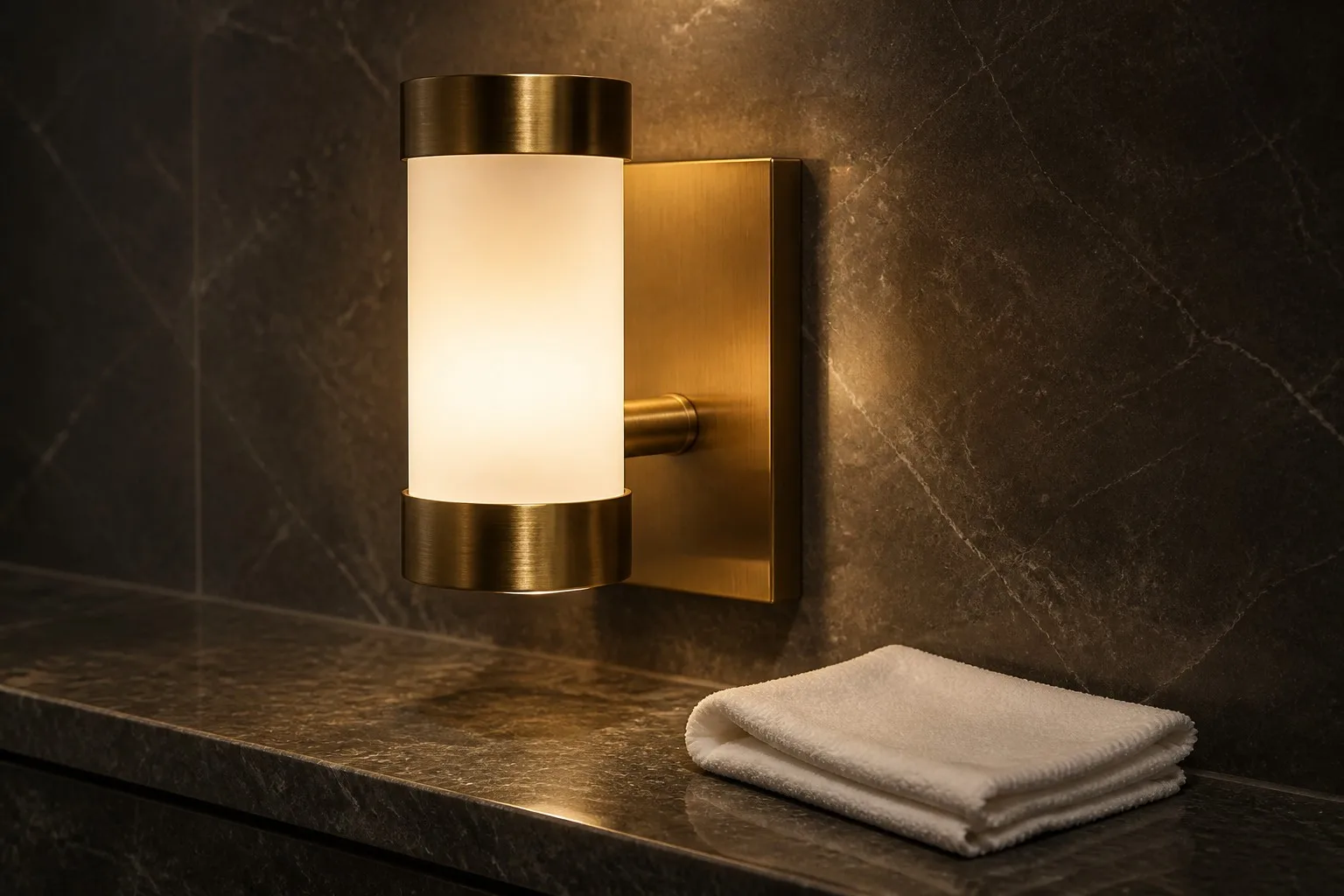
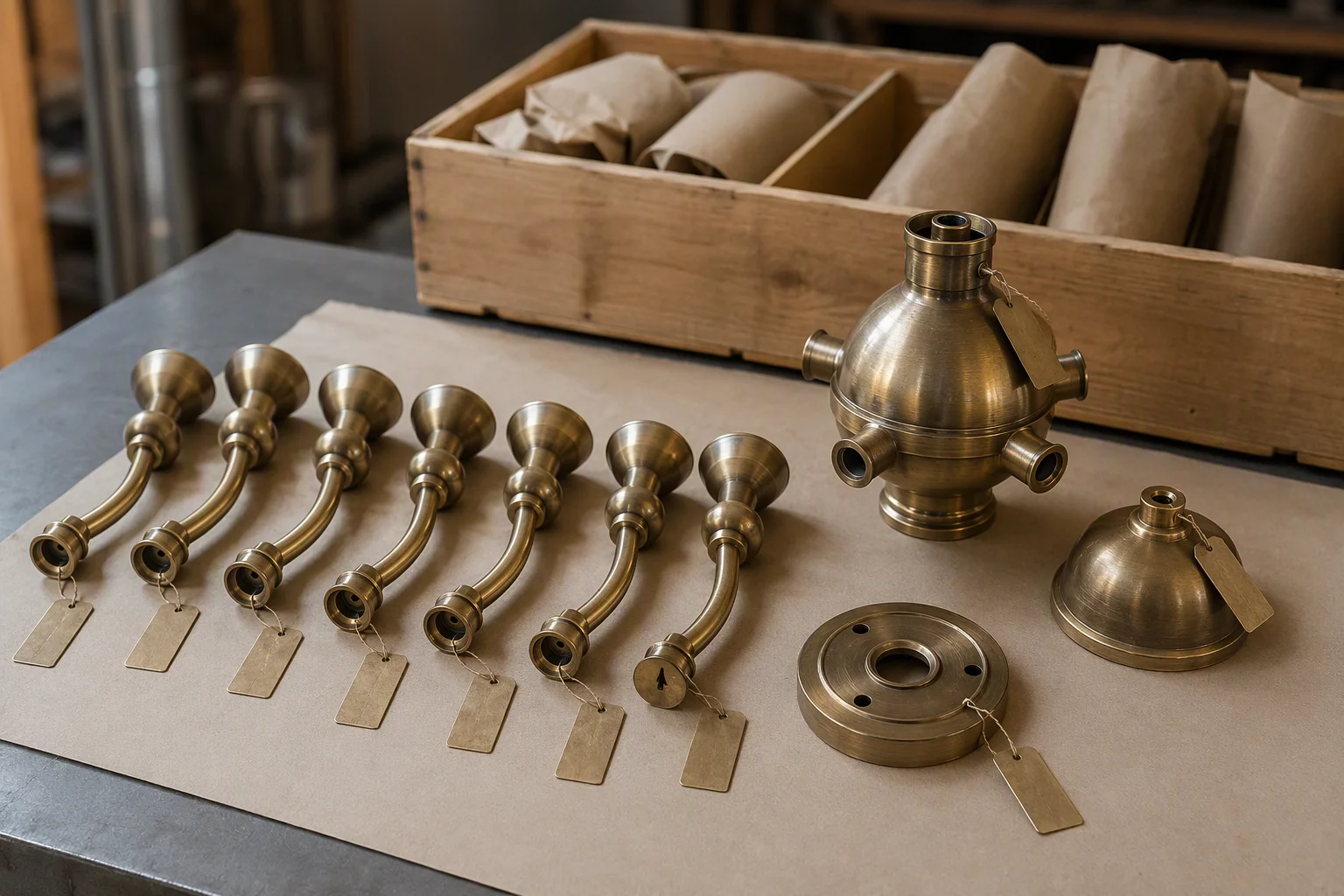
An LED driver is the small module that turns mains supply into the current a light-emitting diode can use. In a decorative hotel fixture it also decides whether the fitting dims cleanly, how warm it runs inside a closed body, and whether a failure is a five-minute swap or a ceiling repair. It never appears in a rendering, and it is almost always the first component a hotel replaces.
This guide is for the designer writing the fixture schedule, the team comparing quotations for the same sconce, and the maintenance lead who will hold the spares for the next decade.
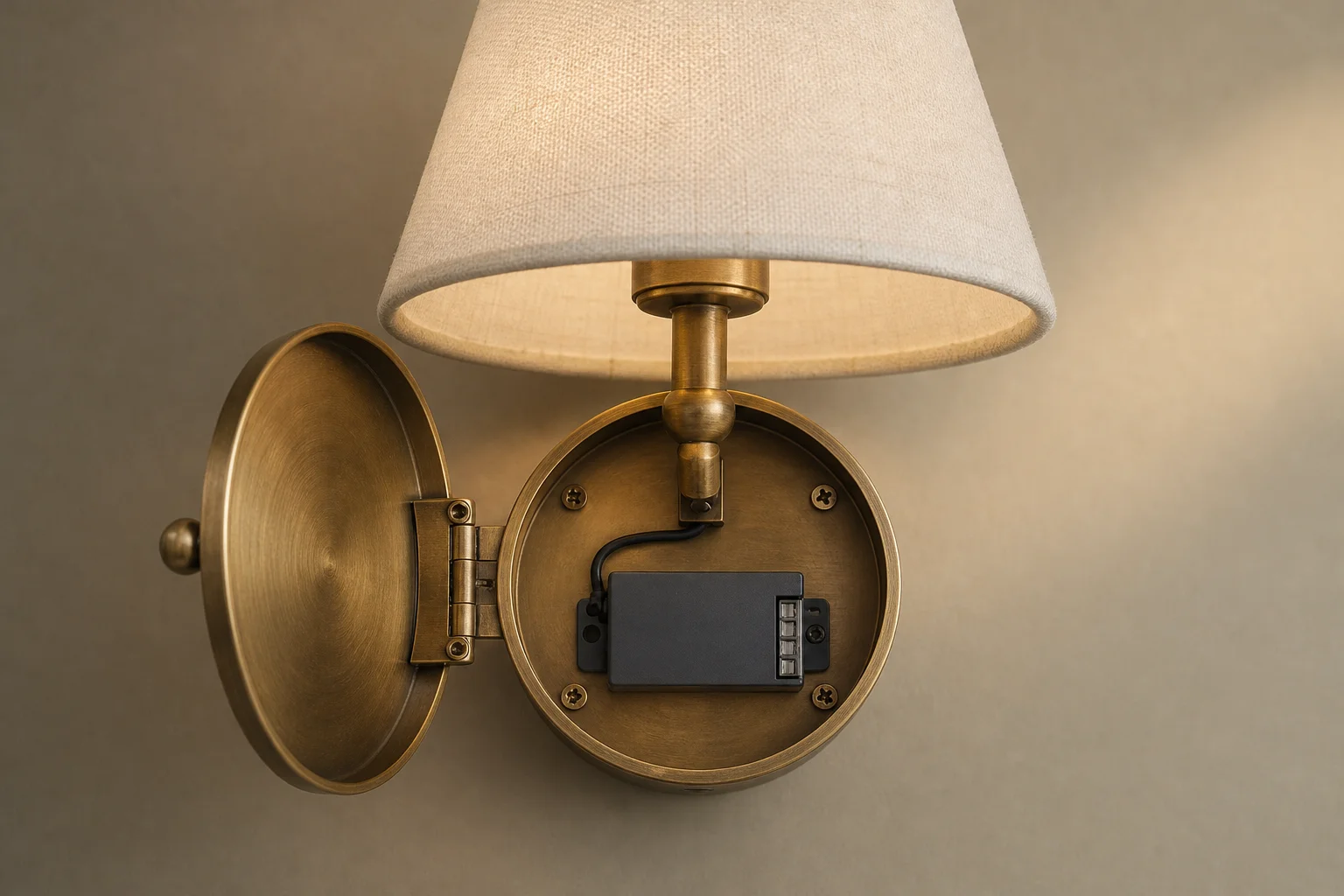 |
| The part nobody draws: a driver mounted inside a closed decorative body settles both how the fitting dims and how it is serviced. |
Where the driver sits inside a decorative fixture
Drivers are not one product with one home. Two arrangements cover most decorative work, and the shape of the fitting usually decides which.
A remote driver sits outside the fitting, in the ceiling void, a wall box or an accessible enclosure. Maintenance teams prefer it: the part is reached without touching the decorative object, and one part number can serve several fittings.
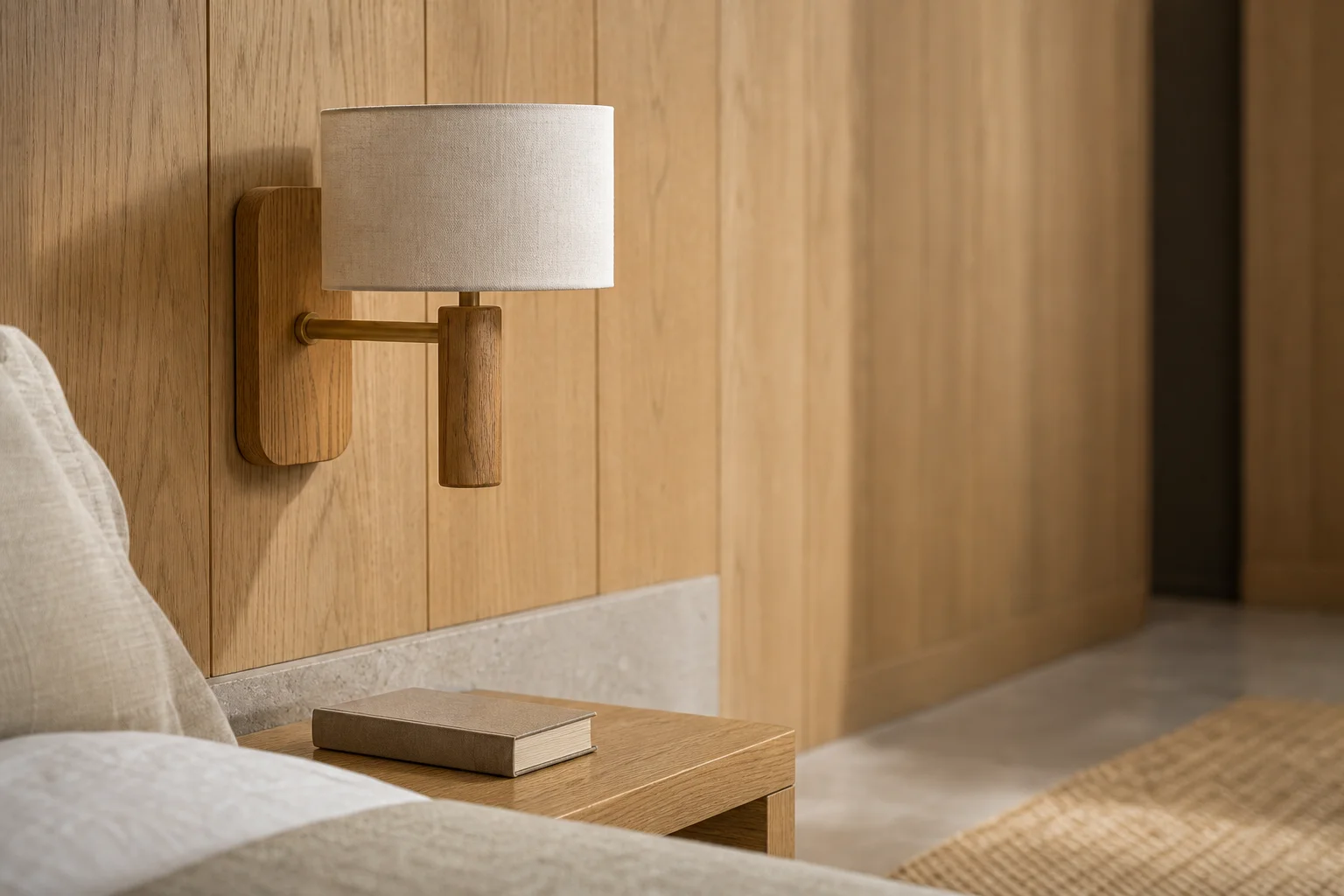
An integral driver sits inside the fixture, in the backplate, the base of a table lamp or the collar behind a shade. On decorative work this is the common case, because there is nowhere else to put it and the design does not want a visible box. It is reached only when the fixture is opened, and its working conditions are set by an internal volume chosen for how it looks.
Why a sealed decorative body changes the thermal picture
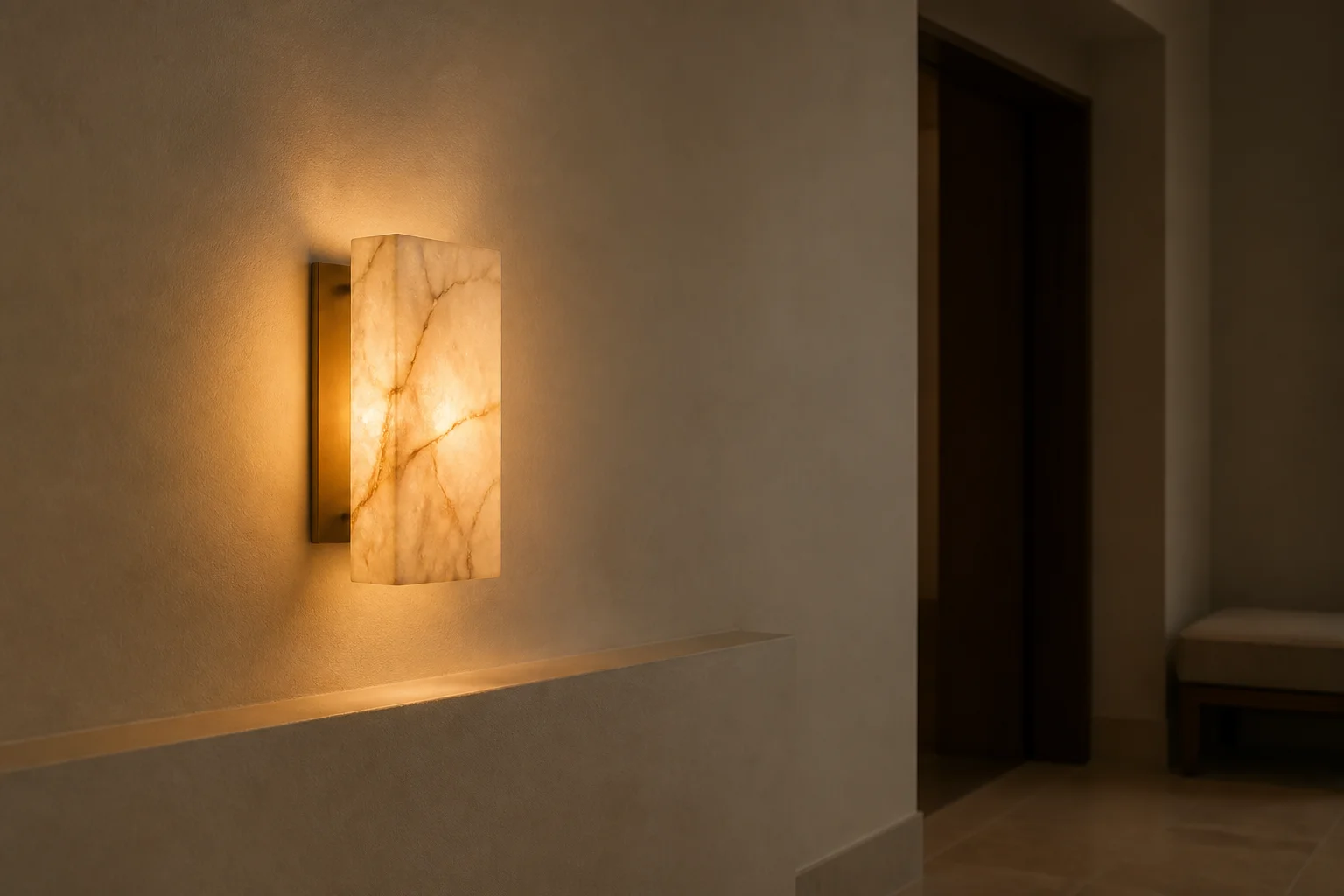
Decorative fixtures are often deliberately closed: a fabric shade over a diffuser, a sealed brass tube, a stone or alabaster shade on a metal collar. Those are choices about appearance, dust and ingress. They also change the temperature the driver sees, because a closed volume has no airflow to carry heat away.
A driver carries a rated ambient and case temperature, and its life falls as temperature rises. Inside a closed body it is warmed by its own losses, the LED board, the lamp and the surrounding metal or stone. How much leaves depends on how it is mounted, whether there is any opening, and how much surface area the body presents to the room.
Surface warmth is worth reading carefully rather than treating as a fault. A brass tube that feels warm low on the run is usually conducting heat outward, which is the body doing its job. The useful question is what conditions the driver was rated for and what the fitting gives it. A fitting bound for a warm climate may need a higher-rated part or a remote arrangement.
What decides whether a driver can be replaced
Two drivers with the same nominal output can differ completely in how they are removed. Three facts settle it, and all three belong in the order paperwork.
- Connectorised or hard-wired. A driver that ends in a plug and socket is a swap. One potted or wired into the fitting is a rebuild unless the whole module comes out.
- Reached from which side. A driver behind a removable backplate is reachable from the room. One sealed above a closed ceiling turns a short job into a ceiling repair.
- Still supplied. A reference current at handover may not be in three years. Ask what replaces it if the original is discontinued.
A replacement also rarely matches the original in length, width and height, so record the available internal envelope while the drawing is still open.
Spares: what the hotel will re-order
On a phased rollout, the part that has to stay orderable for a decade is rarely the fixture. It is the driver.
The protection is a driver schedule that travels with the project rather than the supplier: one line per fitting type, carrying the driver reference, whether it is integral or remote, and the fitting it serves. Keep it in the handover pack. When a rollout runs across phases, split the spare list the same way as the order, so a later phase is not hunting a part that was only specified for the first one.
Low-end dimming: where drivers differ most
Two drivers sold as dimmable from the same nominal output can behave very differently in the bottom of their travel. One holds a stable low level; one steps; one flickers below a threshold; one cuts out, so the last part of the dimmer's rotation does nothing. That behaviour belongs to the driver and is not visible on a datasheet summary.
Mains dimming adds a second variable, because dimmer and driver have to suit each other and a lightly loaded circuit may behave differently from a fully loaded one. Analog and addressable interfaces remove the load question but introduce polarity, wiring, and who commissions the result.
None of this shows up until the room is furnished and someone turns the dial down at night. A fade from full to minimum on one sample of the intended fitting, at the intended interface, is the cheapest test in the package.
What the submittal has to state
An electrical submittal for decorative lighting is short. Every line exists because a question was once asked too late.
| Item | Why it is asked for |
|---|---|
| Driver reference | Lets the hotel re-order the exact part, not a lookalike |
| Integral or remote, and where | Decides how the fitting is opened, and from which side |
| Connectorised or hard-wired | Separates a swap from a rebuild |
| Rated conditions, and the fitting's own | Shows whether a closed body was accounted for |
| Dimming method and low-end behaviour | Settles what the guest will experience |
| Available internal envelope | Admits a substitute replacement later |
| Spare reference per fitting type | Keeps a phased project serviceable |
One caution about documents: a declaration covering a driver family is not a statement about the unit you are buying, because the family may exist in several variants.
The driver checklist before the order
- Confirm where the driver sits, and how the fitting is opened to reach it.
- Ask what conditions the fitting creates inside, sealed body included.
- Record whether the driver is a module on a connector or wired in.
- Measure the internal envelope available for a future replacement.
- Test a fade from full to minimum on the intended interface.
- Write the driver reference and the spare reference into the schedule.
A decorative fixture is chosen on what you can see and maintained on what you cannot. The driver is the part the hotel will meet first.
FAQ
What does an LED driver actually do?
It converts the mains supply into the regulated current the light source needs. It is not an accessory bolted onto a light: it defines the LED's operating conditions, and therefore its output and its behaviour when dimmed.
Can a driver be replaced with a different brand?
Often, if the electrical characteristics, dimensions, mounting and dimming interface all match and the fitting has room. The original reference stays safest: parts that look equivalent on paper can differ in low-end behaviour and rated temperature.
Why does a fitting feel warm near the backplate?
Because the driver and the light source put heat into a closed volume and the body conducts it outward. Some surface warmth is normal; the question worth asking is what the driver was rated for and what the fitting provides.
Do sealed fixtures need a different driver?
They need the driver's rated conditions checked against the closed volume rather than the room. That may point to a higher-rated part, a remote arrangement or a larger internal space, and it is easiest to settle while the drawing is open.
How should spare drivers be chosen?
By fitting type rather than by number of rooms. The supplier's job is to keep the current reference available and to say what replaces it if discontinued; the quantity held is a maintenance policy decision.
The takeaway
The LED driver is the least visible and most serviceable part of a decorative fixture, and usually the first to fail. Its behaviour is settled long before anyone notices it: by where it sits in the body, whether that body is closed, whether it can be reached and unplugged, and how it behaves at the bottom of the dimmer. None of those decisions cost much at drawing stage, and all of them are expensive afterwards.
Ask where the driver lives, what conditions the fitting creates, how it is replaced and from which side, and ask for the reference in writing.
Zerouno Lighting (ZeroUNO) manufactures hospitality decorative lighting in Zhongshan, China, including wall lights, bedside reading lights and ceiling fittings, and has built project and custom fixtures since 2013. Because decorative bodies are often deliberately closed, custom work starts from a single-piece approval sample, so the driver arrangement is settled while the drawing can still change. Learn more at zerounolighting.com.
About the author
Sonny Yu is Sales Manager at Zerouno Lighting in Zhongshan, working with hotel owners, designers and procurement teams on bespoke decorative lighting. He writes about the parts of a fixture that never appear in a rendering but decide what a property lives with for the next decade.