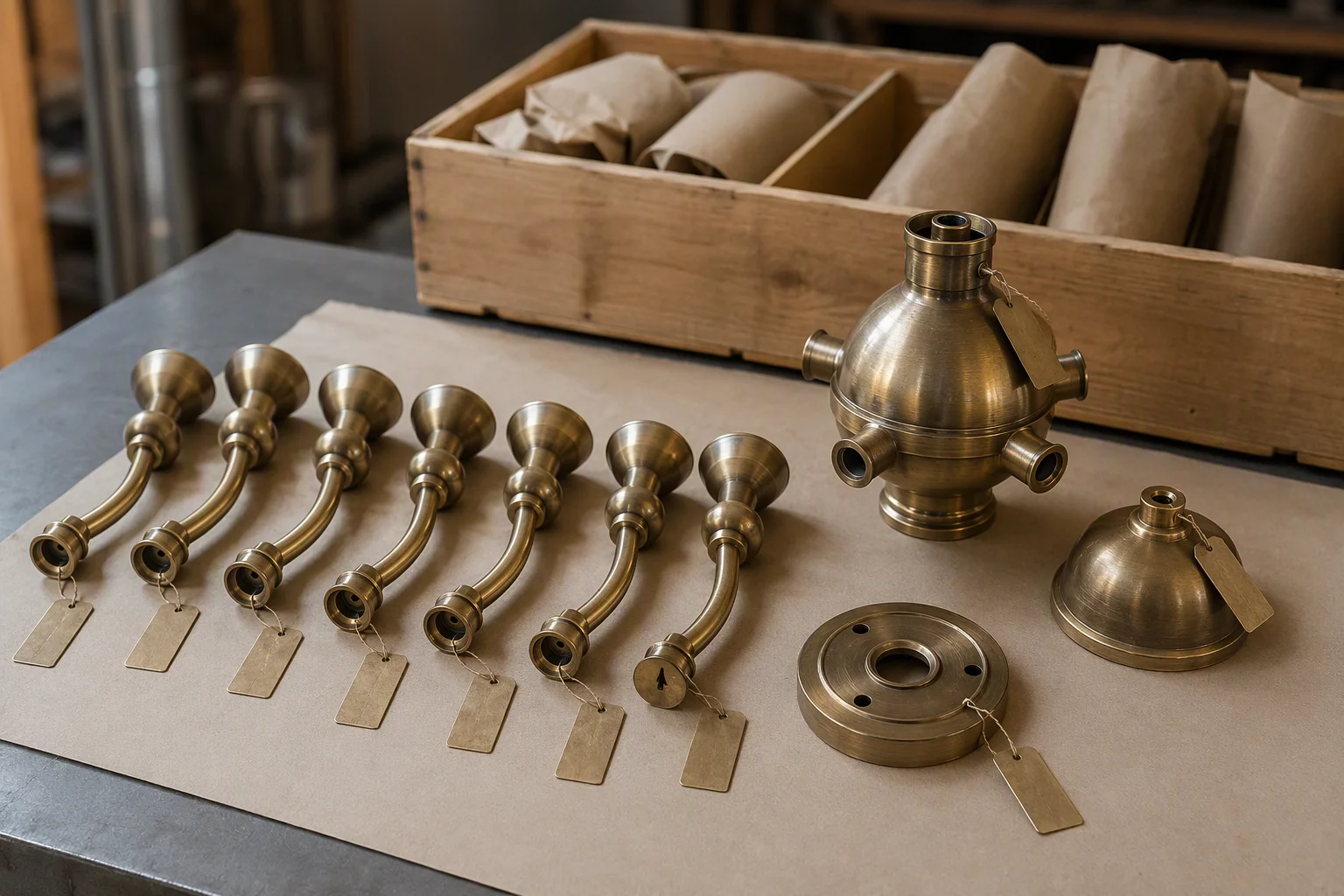
Decorative lighting is one of the last packages to be ordered and one of the first to delay an opening. A single fixture that arrives with the wrong finish, the wrong colour temperature or a driver that does not match the local grid can hold back an entire floor of guest rooms.
The good news: most of those failures are predictable. They are decided at the moment you choose — or fail to properly vet — the manufacturer behind the fixtures.
This guide is written for hotel owners, interior designers, procurement teams and contractors who need to shortlist decorative lighting suppliers for a new build, a renovation or a brand-standard rollout. Below are the twelve checks worth running before you send an RFQ.
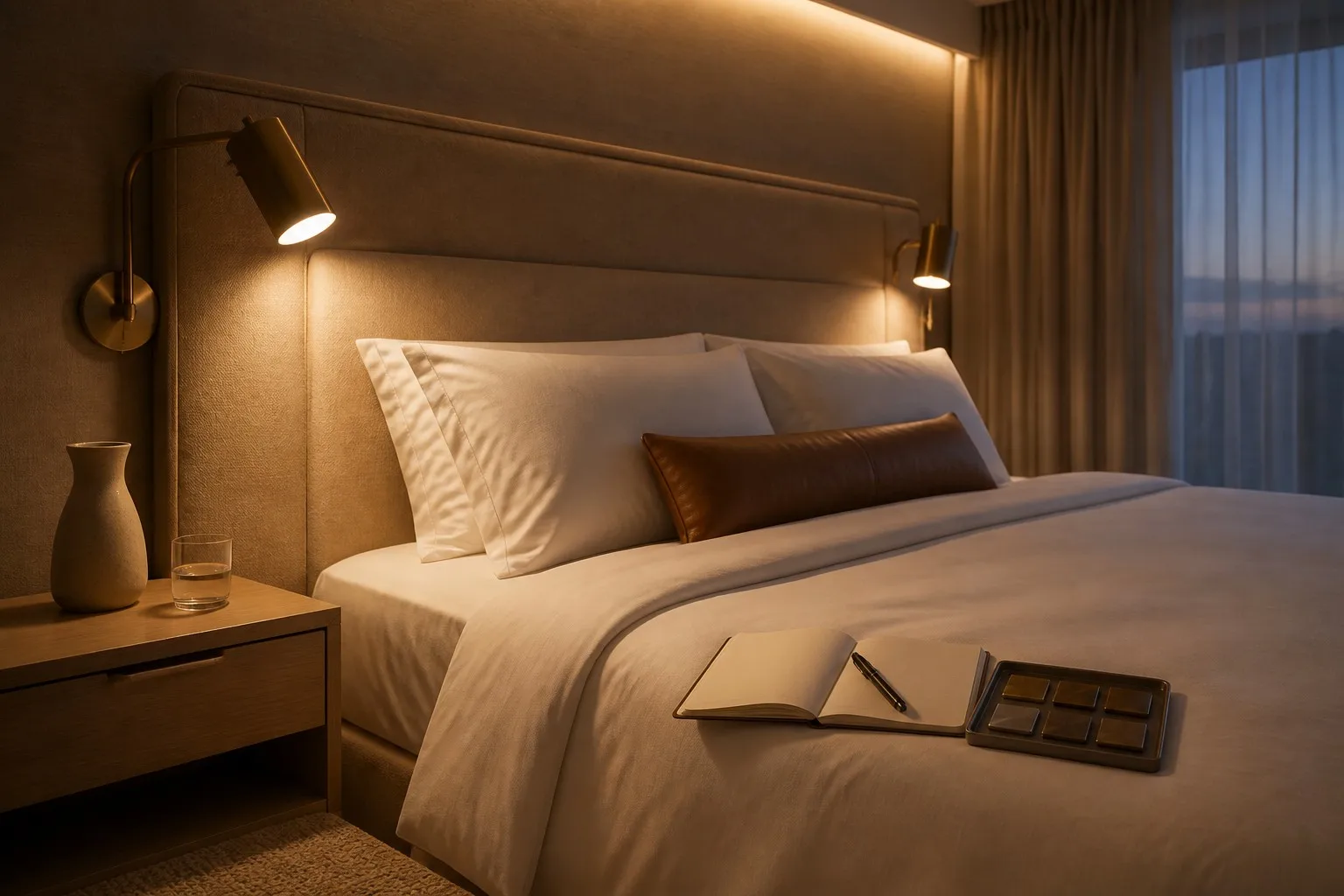 |
| A mock-up room is where most design risk is eliminated — specify the fixture, finish and colour temperature before the bulk order. |
1. Do they actually work on hotel projects — or only on residential?
Hospitality lighting is a different discipline from residential lighting. Guest rooms need reading comfort without glare, corridors need uniformity, and public areas need fixtures that can survive years of daily use and cleaning.
Ask for a hospitality portfolio: which hotel projects, which spaces (guest rooms, corridors, lobby, F&B), and — most importantly — whether they routinely produce mock-up room samples. Mock-up rooms are where most design risk is eliminated, and only manufacturers who work on hotel projects regularly know how to support them.
2. Do they have in-house engineering, not just sales?
A fixture supplier who can only quote a price is not a partner on a hotel project. You need a manufacturer who can support:
- lighting specification documents for consultants
- shop drawings and product drawings for approval
- dimension adjustments for headboard, vanity and corridor conditions
- driver, dimming and voltage planning for multi-country projects
A team of engineers dedicated to specification support is a reliable signal. Hospitality lighting manufacturers typically support clients with drawings and lighting specification documents long before the first purchase order exists.
3. Are the certifications valid for your market — and listed per-market?
"CE certified" is not enough on its own. A hotel project in Europe, the UK, North America, Australia or the Middle East will each require a different compliance set. Ask the manufacturer to state exactly which certificates apply to the fixtures you are specifying:
- Europe: CE, RoHS
- United Kingdom: UKCA
- North America: UL, FCC (for relevant electronics)
- Australia / New Zealand: SAA
Request the actual certificate scope — not a logo wall. Certification that covers a different product family is a common and expensive surprise during handover.
4. What is their MOQ — and will they produce a single mock-up fixture?
For hotel projects, MOQ should be discussed in the context of sample-first development, not mass production. The questions that matter:
- Can they produce 1 pc for a mock-up room?
- How long does a mock-up sample take?
- Can the sample be produced in the final finish, colour temperature and dimming protocol?
A supplier who agrees to a single-piece mock-up before the bulk order is telling you they are comfortable with project-based manufacturing rather than catalogue-only selling.
5. Can they customise the details that designers actually change?
In practice, hotel specifications evolve during design development. The manufacturer should be able to handle:
- Finishes — brushed brass, matt black, satin nickel, bright chrome, wood grain
- Dimensions — length, projection, backplate size, cut-out dimensions
- Colour temperature — 2700K / 3000K / 4000K, and LED options with CRI matched to the space
- Switching and controls — hardwired, plug-in, switches, USB charging modules, dimming
- Packaging and labelling — often overlooked, and a frequent cause of site delays
6. What is the real production capacity and lead time?
Ask for capacity in units per month and lead time by product type, then check that the numbers are consistent with the order size. Useful benchmarks to request:
- Monthly production capacity
- Number of production lines
- Lead time for stock items vs. made-to-order items
- Fastest realistic completion for urgent orders
For reference, a mid-size hospitality-focused lighting factory commonly operates at a scale of hundreds of thousands of pieces per month, with stock items shipping in days and bespoke orders in weeks rather than months.
7. How do they control quality — and can a third party verify it?
Quality control is not a promise, it is a process. Ask:
- How many QC staff are dedicated to production?
- Are there documented inspection stages (incoming material, in-process, pre-shipment)?
- Has the factory been inspected by a third party such as Intertek, and is the report available?
- What happens if a batch fails inspection before shipment?
A factory with a third-party inspection report and dedicated QC headcount is materially lower risk than one that inspects "by feeling".
8. What does the warranty cover, and how fast is after-sales response?
On a hotel project, response time is the real product. Ask for:
- Warranty length (2 years is a common standard for hospitality decorative lighting)
- Response SLA for issues — measured in hours, not weeks
- Whether remote support is available for installation, including video guidance
- Whether spare parts and replacement units can be supplied quickly
9. Do they hold patents — and can they protect your design?
If your design team has created something distinctive, the last thing you want is that fixture appearing in a competitor's property six months later. Ask whether the manufacturer:
- holds patents on its own designs (50+ patented products is a common scale for established hospitality manufacturers)
- can support a client's own patent application for bespoke designs
- has confidentiality terms covering drawings and project information
10. What is their export experience across the markets you operate in?
Multi-country hotel groups need one supplier who can handle different plugs, voltages, packaging labels and documentation. Ask:
- How many countries do they currently export to?
- Which regions are strongest (Europe, Asia, North America, South America, Middle East)?
- Can they handle EU/US/UK plug options and AC 100–240V input as standard?
Broad export experience is the cheapest insurance against country-specific compliance mistakes.
11. Can they evidence repeat business with hotel brands?
Ask which hotel brands or brand standards they have supplied. Then look for a repetition pattern: suppliers who survive hospitality procurement tend to have high repurchase rates and long-standing clients.
For example, a manufacturer supplying guest room lighting to recognised international hotel groups, with a repurchase rate above 90%, is demonstrating delivery reliability rather than marketing reach.
12. Is the commercial process transparent from sample to shipment?
Finally, test the process itself:
- Are sample costs, tooling costs and payment terms stated clearly?
- Is there a single contact for engineering questions and another for commercial ones?
- Are lead times written into the quotation rather than promised verbally?
A supplier who is vague at quotation stage will be vague at handover stage.
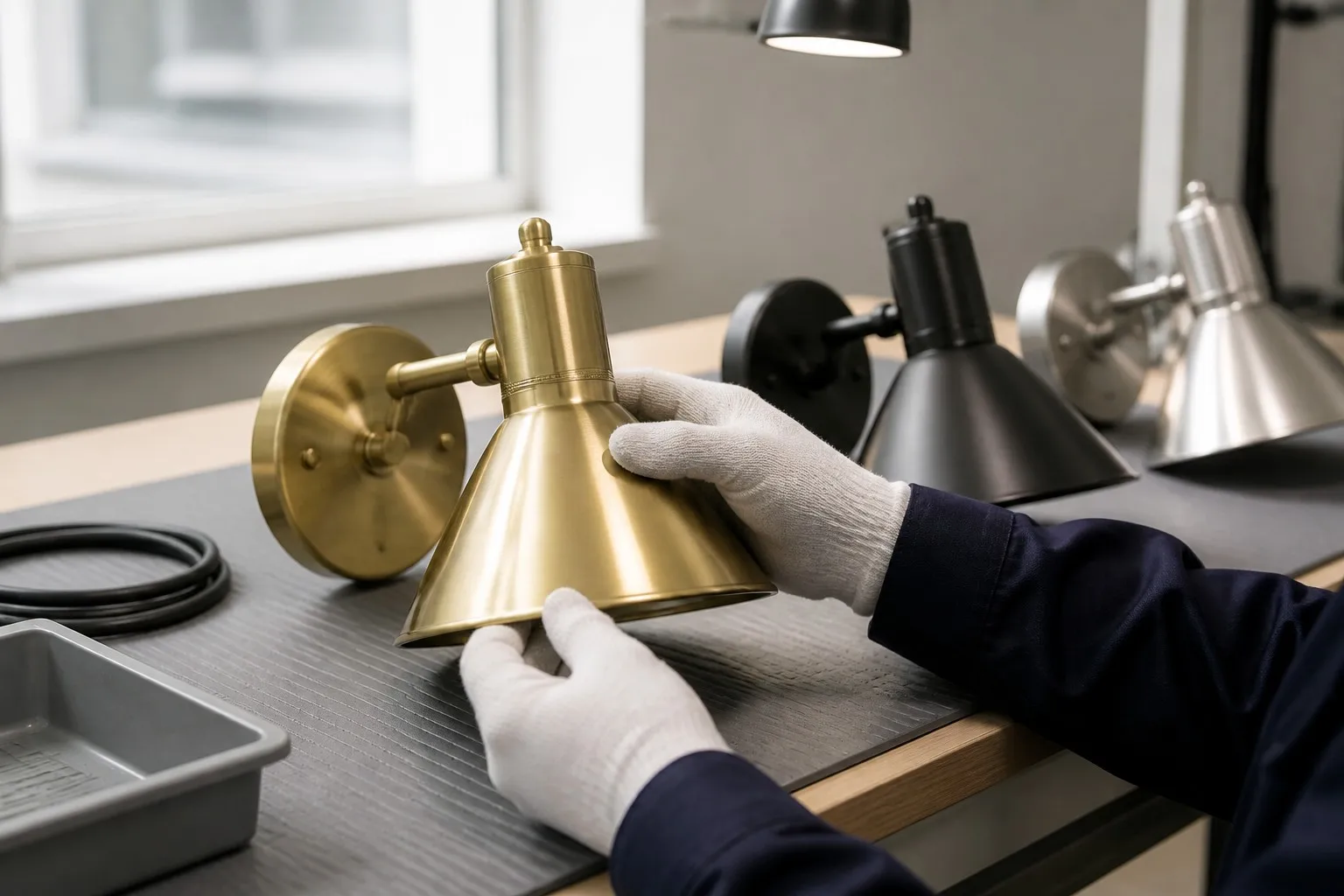 |
| Finish consistency and pre-shipment inspection are the two checks most often skipped at quotation stage. |
Common red flags to watch for
| Red flag | Why it matters |
|---|---|
| Certificates listed without scope | May not cover the fixture you are ordering |
| Refusal to produce a 1-pc mock-up | Design risk lands on you at handover |
| No in-house engineering team | Every drawing change becomes a delay |
| Lead times only promised verbally | No recourse if the schedule slips |
| No third-party inspection record | Quality claims cannot be verified |
| No patents or confidentiality terms | Your bespoke design is unprotected |
FAQ
What is a reasonable MOQ for custom hotel lighting?
For hospitality projects, MOQ should be flexible enough to allow a mock-up room. Suppliers experienced in project work commonly accept a single-piece sample order, with the production MOQ agreed separately for the bulk order.
How long should hotel lighting production take?
Stock items can ship within days. Made-to-order decorative fixtures typically take several weeks — commonly 25–35 days — while urgent orders can sometimes be compressed, for example to around five days for specific product types.
Which certifications matter most for a hotel project in Europe?
CE and RoHS are the baseline. UK projects additionally require UKCA, while North American projects typically require UL, and Australia/New Zealand require SAA. Always confirm which certificates apply to the specific fixture family.
Should the same manufacturer supply guest rooms and public areas?
It is efficient if the manufacturer has both project capability and customisation depth, because finishes and colour temperatures stay consistent across the property. Where a manufacturer specialises only in one product type, expect to coordinate finish matching manually.
How do you verify claims about hotel project experience?
Ask for the mock-up process, engineering drawing samples, third-party factory inspection reports, and named brand standards supplied. Delivery history is harder to fake than a portfolio page.
The short version
The best hotel lighting manufacturer for your project is the one that can answer all twelve checks above with documentation, not adjectives: hospitality references, in-house engineering, market-correct certifications, single-piece mock-ups, defined lead times, verifiable QC, real warranty terms and transparent pricing.
Build the checklist into your RFQ. It takes an afternoon and routinely saves weeks on site.
Zerouno Lighting (ZeroUNO) is a hospitality decorative lighting manufacturer based in Zhongshan, China, producing wall lamps, table lamps, floor lamps and pendant lighting for hotel guest rooms and public areas. Learn more at zerounolighting.com.
About the author
Sonny Yu is a Sales Manager at Zerouno Lighting, working with hotel developers, designers and procurement teams on decorative lighting packages for guest rooms and public areas. He writes about hospitality lighting specification, customisation and project delivery.