An RFQ is the cheapest document in a lighting package, and it decides the most. It is also the one most often written in an afternoon, from a template left over from the last project, with a line that says supply decorative lighting as per drawings.
Change orders rarely arrive because a supplier was careless. They arrive because a question the buyer never answered came back months later as a variation, a re-price or a delay. This guide is for the people who write it: procurement teams and project managers on hotel work. Eighteen details, grouped by what each one protects.
 |
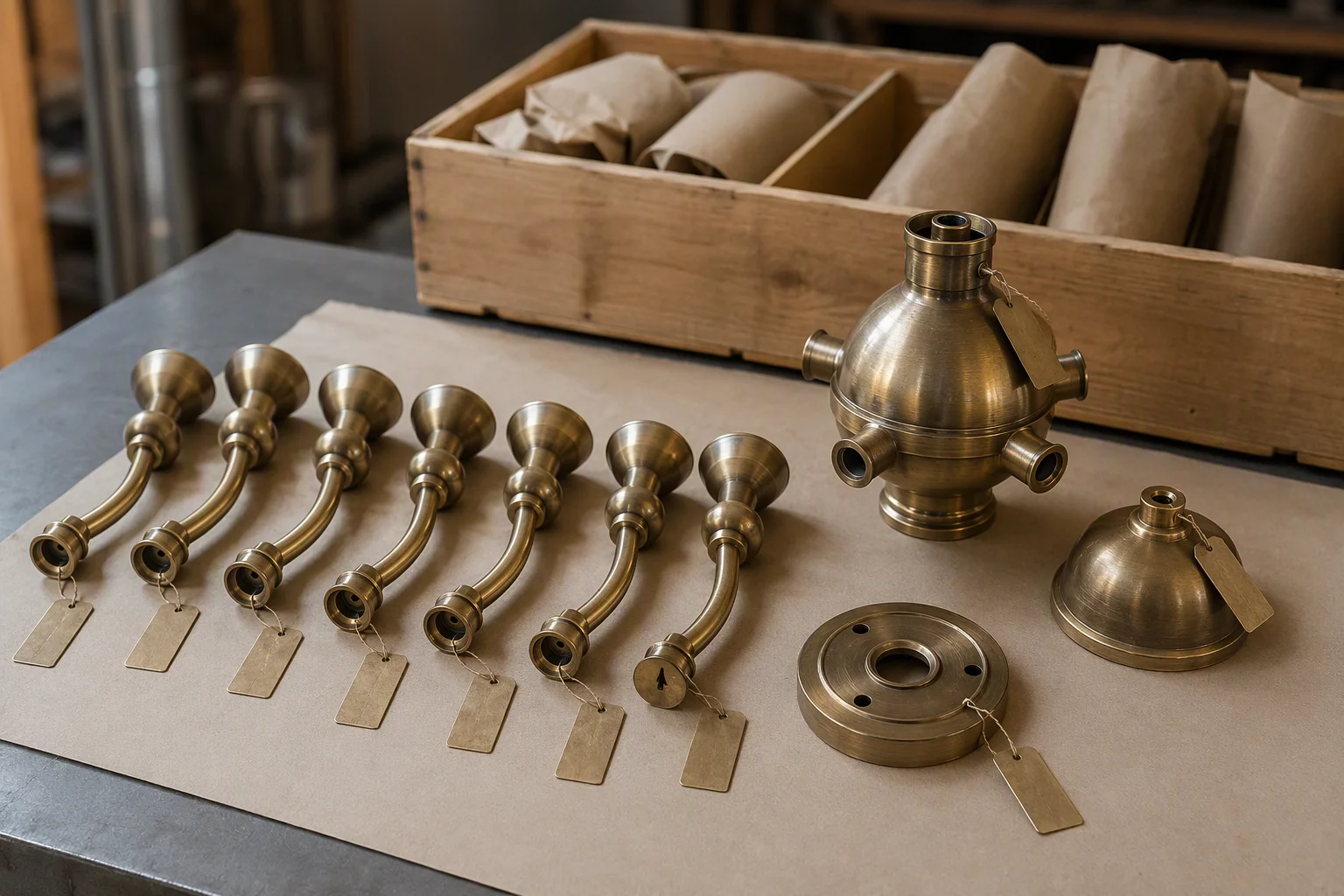
| A sample and its finish swatches are the two things an RFQ has to describe precisely, or the order is built on an assumption. |
Why change orders usually start in the RFQ
The RFQ is the only document every party works from. The drawing set, the schedule, the finish samples and the commercial terms reach a supplier as attachments, and the RFQ tells them how to read those attachments together. When it is thin, suppliers do not ask. They price the version that protects them.
So five suppliers submit five prices built on five different scopes, and the comparison you expected is not one. The second cost arrives later: once the order is issued, every requirement added after it is a change order, negotiated from the weaker side of the table against a clock that has already started.
The 18 details, grouped by what they protect
The list falls into four groups: scope, technical, commercial and documentation. The grouping is not a filing system; it marks when the cost of leaving a detail out shows up.
| # | Detail to state in the RFQ | What it prevents later |
|---|---|---|
| 1 | Project type and the room schedule, by drawing | Quoting a type the project does not have |
| 2 | Quantity per type, plus the spare allowance | Re-pricing at the first quantity change |
| 3 | Delivery address and the delivery sequence | Freight and access assumptions that differ |
| 4 | Target installation window, as a week | Offers built on different lead times |
| 5 | Who holds the site measurement and the approval | Dimension disputes during production |
| 6 | Fixture family and drawing number from the schedule | Substitutes quoted against the wrong item |
| 7 | Finish named by process, not by colour name | A colour that cannot be matched in a run |
| 8 | Material of every visible part | Value engineering after award |
| 9 | Light source and colour temperature as an agreed range | Source and driver swaps at approval |
| 10 | Control interface and the system it joins | Control gear changed after approval |
| 11 | Wet or exterior zone requirement, per the project team | Re-sealing or replacement on site |
| 12 | Incoterm, and who clears duty | Two quotes on two different terms |
| 13 | Payment milestones and what triggers each one | A dispute over deposit and balance |
| 14 | Sample and mock-up approval as a gate on production | A run released against an unapproved sample |
| 15 | Substitution notice as a condition of the order | A swapped component found at handover |
| 16 | Declarations and test documents by drawing number | A pack that cannot be matched to the schedule |
| 17 | Pre-shipment inspection and who witnesses it | An inspection claim with no record behind it |
| 18 | Label, packing and pallet marking to the install sequence | Cartons opened to find what is inside |
Scope: the five details that decide who is quoting what
Items 1 to 5 are the ones a supplier cannot fill in for you. The room schedule tells them which drawings matter; the quantity per type tells them how much of the job is standard. The delivery sequence is the detail buyers skip most, and it changes freight: a single drop to a loading dock and a floor-by-floor release are different jobs.
Name who holds the site measurement. If the buyer measures and the supplier fabricates, the tolerance belongs to the buyer, and that should be known before approval rather than after a fixing does not line up.
Technical: the six details that decide the price
Items 6 to 11 are what the price is built from. A fixture family named loosely invites a substitute with the same look and a different build. A finish named as antique brass describes an appearance; named by process, it describes something repeatable across a run and across later project phases.
State the material of each visible part, because the parts you cannot see are where a quote is quietly reduced. Light output and colour temperature belong on the page as a range agreed with the project lighting designer: a change after approval reaches back into the driver, the source and the testing. The control interface is the same argument: the system the fixture joins is a technical fact, not a preference. Where a fixture sits in a wet or exterior position, the zone requirement comes from the project team, and the supplier answers it with construction.
Commercial: the four details that decide the schedule
Items 12 to 15 belong in the same document as the technical list, because they decide how the order behaves after it is placed. An RFQ that does not name an Incoterm gets replies on different terms, and the lowest number may be the one that excludes the most. Payment milestones are clearer when each names its trigger: deposit, sample approval, pre-shipment and delivery.
Two of these are gates rather than terms. Sample and mock-up approval should hold the production release, so no run starts against an unapproved sample. Substitution notice should follow the project into its later phases, since a component re-sourced in month nine still has to match what the earlier phase received.
Documentation: the three details that decide acceptance
Items 16 to 18 decide whether the goods are accepted when they arrive. Ask for declarations and test documents by drawing number: a certificate naming a sales model and a schedule naming a drawing are hard to reconcile at handover.
State the pre-shipment inspection requirement and who attends it, so the record exists before the container is sealed. Then specify label, packing and pallet marking against the installation sequence, so cartons reach the right floor without being opened to find what is inside.
Releasing the RFQ so every reply is comparable
The list only works if all of it reaches every bidder. Four habits make the replies comparable:
- Send the same package to every bidder, and note what is not included.
- Number the questions and ask for numbered answers, so a gap is visible rather than buried in prose.
- Ask what the supplier has excluded, the single most useful line in any quotation.
- Fix a reply date and hold it: late replies often come from bidders who read the scope most carefully.
Then compare on scope rather than on total: two quotes that differ by a percentage may simply cover different packages.
Reading the replies without re-opening the scope
The reply is where an RFQ either holds or dissolves. Check each bidder against the numbered questions before looking at price, and treat a blank answer as a question rather than a saving.
A supplier can only be held to the gaps the RFQ left open. Every detail you leave out is one you will negotiate later, with less leverage and a shorter clock.
If two replies land close on scope and far apart on price, the difference is normally in the parts nobody can see: the driver, the plating, the packing. Ask both for the component list against the drawing.
FAQ
How long should an RFQ for a hotel lighting package be?
Long enough to answer the eighteen points above, and no longer. A schedule, a drawing set, a finish list and numbered requirements cover most packages. Length is not the measure; completeness is.
Should the RFQ go out before the finish samples are approved?
Yes, provided the finish is described by process rather than by photograph and sample approval is named as a gate on production. Sending it earlier buys schedule; sending it with a colour name only buys a later argument.
Who states the light output and colour temperature?
The project lighting designer, confirmed against the standard for that location. The supplier's role is to meet the stated range.
Do we need a mock-up room for a small package?
Not always. A single approved sample will carry a standard fixture, while custom work, unusual dimensions or a first order with a new supplier benefits from a room reviewed in real conditions.
What if a supplier refuses to state their exclusions?
Treat it as a warning. A supplier who will not describe the boundary of their offer has either not read the package or does not intend to be held to it.
The takeaway
Change orders are usually written before the order, in the RFQ that went out without them. Spend the extra afternoon on the four lists, and the same eighteen details do something useful: they make five replies comparable, and they keep the negotiation at the quoting stage, where you still have choices.
Zerouno Lighting (ZeroUNO) manufactures hospitality decorative lighting in Zhongshan, China, and has built project and custom fixtures since 2013. Custom enquiries normally start with a one-piece sample against the drawing, and made-to-order work typically runs 25 to 35 days once the sample is approved. Learn more at zerounolighting.com.
About the author
Sonny Yu is Sales Manager at Zerouno Lighting, working with designers and procurement teams on hospitality lighting packages. Much of his week goes on reading the specification, the schedule and the quotation against each other, and finding the detail the three describe differently.



没有评论:
发表评论