Choosing a supplier is the decision everyone prepares for. The order that follows gets far less attention, and that is where most of the avoidable problems sit: a finish that drifted from the approved sample, a balance paid against a date instead of a milestone, a document set that arrives after the goods, or a delivery term loose enough to argue about.
This guide is for procurement leads and project managers who have chosen a supplier, likely in China, and are now writing the order. It sets out what to fix before the deposit leaves, how to attach payments to verifiable checkpoints, what the inspection right buys you, which documents travel with the goods, and where the risk changes hands.
 |
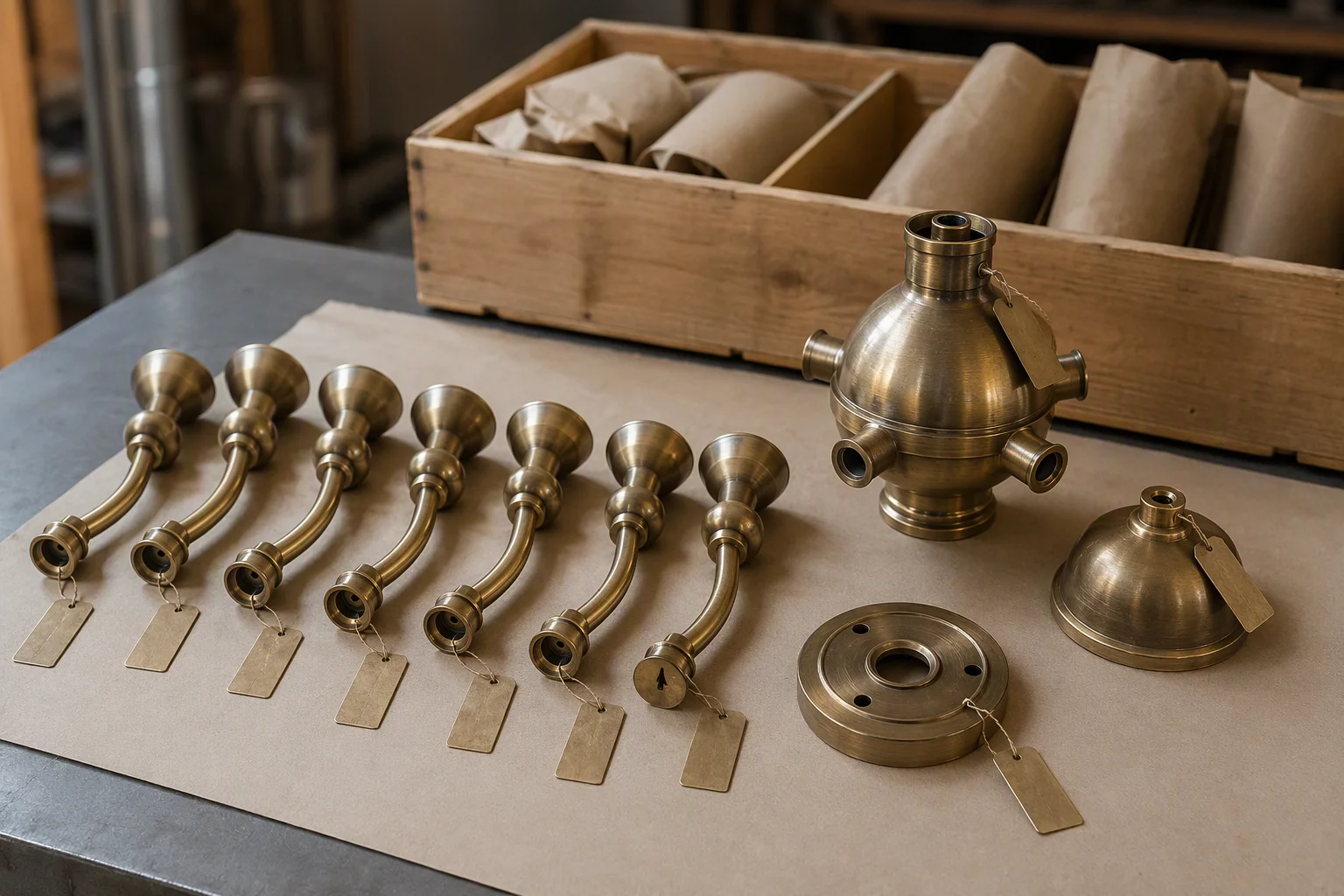
| A finished fixture staged with its driver and hardware: the release a payment milestone should be tied to. |
Why the verification work starts after the supplier is chosen
Selection answers one question: can this factory make the fixture to the standard the project needs. It says nothing about whether this particular release will match what both sides agreed. Those are different risks, surfacing at different times.
- Specification drift. A quotation is priced against a drawing revision. When the drawing moves and the order does not, the factory builds one version and the site expects another.
- Terms left open. Who books freight, what the price covers, how long it holds, what happens if material costs move. Silence is not agreement; it is a dispute with a delay attached.
- Document gaps. Files naming a product series rather than the ordered article, or predating a component change, are treated by the site team as missing.
- Logistics assumptions. Both sides assume the other is arranging something, and the discovery happens once the container is at the port.
Every one of those is cheap to close while the order is a document and expensive once it is a shipment.
The commercial frame to settle before the deposit moves
Six items do most of the work. None is legal boilerplate; each closes a specific way an order goes wrong.
| What to settle | Why it matters | What a clear version looks like |
|---|---|---|
| Revision reference | A quotation is valid only for the drawing it was priced against | The order names the revision and its pricing date |
| Scope boundary | Drivers, hardware and spare parts are quoted in or out by habit | An explicit included and excluded list sits in the order |
| Delivery term and named place | A term without a place does not fix where responsibility changes | Term plus a named port, terminal or warehouse, and who books freight |
| Payment milestones | A schedule built on calendar dates pays for elapsed time, not progress | Each instalment tied to an event you can verify |
| Price validity and variation | Material and freight move; an open-ended price invites argument | A stated validity window and a named re-quote trigger |
| Tooling and sample ownership | Tooling and samples are paid for once; ownership is not automatic | The order states what is chargeable and who holds tooling and sample |
Tie each payment milestone to a physical checkpoint
The most common order failure is not a bad factory. It is a payment schedule that cannot fail, because nothing objective sits behind each instalment.
- Sample approval: the single-piece sample signed against the drawing revision, with the sign-off recorded.
- Production release: material issued and first articles checked against that sample before the run continues.
- Pre-shipment pass: the inspection result recorded and shared before the balance falls due, not after.
- Booking confirmation: freight booked against a stated sailing date, with the place named in the term.
- Document set: the file that travels with the goods, complete and matching the order.
Where the balance is due before departure, the inspection should sit ahead of it. If it sits after, the payment rests on nothing you have seen.
An order is not verified at the port. It is verified the moment the drawing, the sample, the payment and the packing list describe the same thing, and the cheapest moment to check is before the deposit leaves.
The inspection right, and what it can settle
How to run a pre-shipment inspection is a subject of its own. At order stage the question is narrower: what the right to inspect buys you, and what it costs when used.
- Who inspects. A third party, your own representative, or the factory's recorded checks. Decide before pricing, because a third-party visit adds days.
- Notification window. How much notice the factory needs, so goods are packed but not yet sealed into a container.
- What happens on a fail. Whether production is reworked, rechecked or paused, and who decides.
- Who bears a second visit. A re-check costs money and days; say in advance who carries it.
- The record. Photographs, measured dimensions, packing state and date, stored with the order file, not in a message thread.
An inspection right with no stated consequence is a preference. With a named remedy it is a term, and that term keeps a delivery date honest.
The document set that has to travel with the goods
How the goods are protected and labelled in transit is covered elsewhere. What matters here is the file: a fixture arriving without its paper is a fixture the site team cannot sign off.
| Document | What it should name | Who relies on it on site |
|---|---|---|
| Invoice and packing list | The article numbers and quantities on this order | Customs and the receiving team |
| Approved drawing and revision | The exact version the order was built from | The installer and the site engineer |
| Sample record | The sample reference and its approval date | Whoever checks first deliveries against the approved version |
| Submittal file | The technical documents the specifier agreed to | The consultant's approval file |
| Installation instructions | Mounting and connection guidance for this article | The electrical contractor |
| Spare parts and warranty statement | What is supplied, and what you agreed covers it | Facility and maintenance teams |
Two boundaries matter. Marking regimes and substance documentation form a separate compliance file, requested for the models actually shipped. A document naming a product family rather than the ordered article is treated as absent, even if it exists.
Shipping terms, and where the risk changes hands
The commercial term is the part of an order most often reduced to three letters. That is where the ambiguity concentrates.
- The production plan and the sailing date. Made-to-order lighting runs on a production window, so booking freight before production ends moves the risk of a missed vessel onto you.
- The named place. Without a named place the handover point is undefined. Write the port, terminal or warehouse into the order.
- Clearance and insurance. Customs clearance and cargo insurance sit outside the transport itself. Name the party responsible for each.
- Consolidation. Mixing this order with others reduces freight but complicates a damage claim, because responsibility is split.
- Arrival checks. Agree how quickly goods are checked after arrival, and how long you have to report damage.
These lines decide whether a delay becomes a commercial event or a dispute. Writing them takes minutes; reconstructing them after a missed vessel takes weeks.
FAQ
Should the balance be paid before or after the inspection?
Inspection first is the cleaner sequence, because the payment then sits behind a verified result. Where the factory needs the balance before departure, move the inspection ahead of it.
What does a delivery term such as FOB or DDP actually decide?
It decides where responsibility for the goods changes hands and which costs sit with which party. It does not decide the price, or who clears customs and insures the cargo.
Do I need a third-party inspection on a decorative lighting order?
Not always. On a repeat order built to an approved sample, the factory's own records with a first-article check may be enough. What matters is that the right exists in the order.
Which documents should arrive before the goods?
At minimum the packing list, the invoice and the approved drawing revision, so the receiving team can match the delivery to the order. The submittal file and sample record are best settled before production is released.
What if the delivered finish does not match the approved sample?
That is why the sample record matters: the comparison is made against the signed sample and its revision, not a colour description in an email. Agree in advance how long the factory has to correct a deviation before the delivery date is at risk.
The takeaway
The order stage is where a good supplier choice is protected or wasted. Fix the six commercial items before the deposit, attach every payment to something verifiable rather than a date, and decide what the inspection right means when it fails. Then check that the document set names the article being shipped, and define the delivery term precisely enough that both sides agree where responsibility moves. None of it is complicated, and all of it is cheaper before the goods leave than after.
Zerouno Lighting (ZeroUNO) manufactures hospitality decorative lighting in Zhongshan, China, and has produced project and custom fixtures since 2013. Orders are built against a single-piece sample approved before the run is released, with made-to-order windows of 25 to 35 days and stock items ready in one to two days. Learn more at zerounolighting.com.
About the author
Sonny Yu is Sales Manager at Zerouno Lighting, working with hotel owners, designers and procurement teams on decorative lighting packages. He writes about the part of a project that happens after the design is agreed: how an order is written, verified and documented so what arrives matches what was approved.



没有评论:
发表评论