A hotel group approves one lighting family and then applies it to eight properties, in three countries, over eighteen months. The design intent is settled early. What stays open is who will supply it, and the shortlist is often built the way it was built the first time: three or four names, a price request, a sample, a decision.
That approach survives the first property and starts to cost money from the second. This guide is for the group procurement lead, design manager and project engineer shortlisting suppliers for a rollout rather than a single building. It covers how to group the work before approaching anyone, which decisions must stay identical, and the checks that only appear at programme scale.
 |
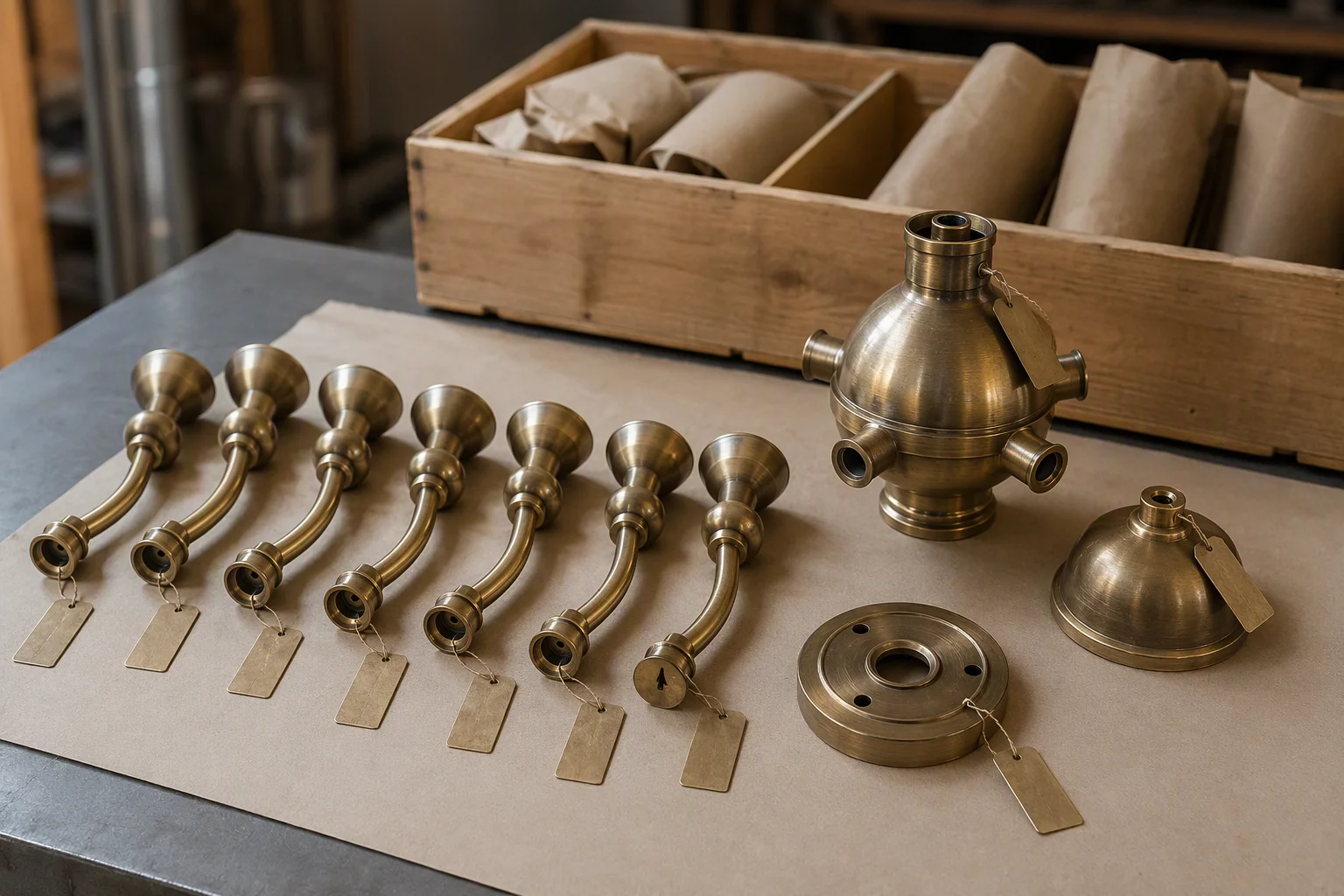
| A held finish reference: one approved sconce with the components it is checked against, phase after phase. |
Why a rollout shortlist is not single-project selection repeated
On a single project the question is whether one supplier can make one package to the drawings, on time, to the agreed finish. On a rollout the question changes shape: the same answer has to hold several times, months apart, without the package drifting.
Three things appear at rollout scale that a single-property enquiry never tests. Repeatability, meaning the second and fifth properties arrive looking like the first. Spares continuity, meaning a part ordered in year three matches the part fitted in year one. And programme behaviour, meaning the supplier can hold a slot and stay reachable while several sites are live at once.
None of these can be judged from a photograph of a sample. They are decided by how a supplier works, which is why the shortlist must be built on capability rather than one returned price.
Group the properties before you group the suppliers
The shortlist becomes manageable once the estate is grouped. Suppliers are then measured against a handful of groups rather than eight separate projects.
| Grouping axis | What it separates | Why it changes the shortlist |
|---|---|---|
| Room count and mix | Standard rooms, suites, public areas | Decides whether one family carries a property or needs sub-families |
| Brand tier or design intent | Flagship against select-service | Sets the finish level and which suppliers can hold it consistently |
| Destination and electrical configuration | Voltage, frequency, connection method | Decides whether one variant serves several properties |
| Opening or refurbishment date | Sequence and phase release | Decides whether a supplier must hold slots across a programme |
| Scope of the package | Decorative lighting, or lighting with loose furniture | Decides whether the supplier is coordinated or co-responsible |
| Existing installed base | Refurbishment against new build | Decides how closely new pieces must match what is already on the wall |
Two or three groups are usually enough. A group containing one property is not a group; it is an exception, and exceptions belong in a written list rather than in the criteria.
Decide what must be identical and what may vary
Programmes fail when the wrong things are held rigid. Freezing everything produces impossible orders. Freezing nothing produces properties that no longer read as one brand.
| Element | Held identical | Allowed to vary |
|---|---|---|
| Finish and colour family | Yes, against one agreed reference per material | No |
| Shade material and shape | Yes within a family | Only where design intent differs by tier |
| Driver and control family | Yes, where controls are shared | Where a property's system differs |
| Dimensions | No | Yes, by ceiling height and wall zone |
| Cord set and connection | No | Yes, by destination |
| Mounting and fixing detail | Partially | Yes, where the substrate differs |
| Spare part references | Yes | No |
This turns a vague instruction into a specification line. "Match the family" is not checkable. "Finish reference, shade shape and driver family are fixed; dimensions and cord set are per property" is.
Capability checks that only appear at rollout scale
The standard supplier checks still apply. What follows is the part a single-property enquiry does not surface, and where a shortlist should do its real work.
- Can the supplier hold the agreed finish across phases produced months apart, and keep a reference sample from the first approved batch?
- Will part references be recorded so that a spare ordered in year three matches what was fitted in year one?
- Can units be packed and identified per property and per phase, so cartons arriving on three sites can be sorted without opening them?
- Is there capacity to hold a production slot rather than fit the programme into whatever is left?
- Who coordinates when two properties are live at once, and is that escalation path written down?
- What happens to the spares allowance when a programme runs past its original end date?
- How are packing lists issued, per phase, and to whom on site?
A supplier that answers these seven clearly earns a place on the shortlist even if another returns a lower price against the first property.
A scoring frame agreed before responses arrive
| Criterion | What it tests | How to test it at shortlist stage |
|---|---|---|
| Specification compliance | Whether the supplier can meet the family without restating it | Ask for a marked-up drawing set, not a brochure |
| Repeatability and finish control | Whether phase two matches phase one | Ask how a finish reference is held and re-checked |
| Quality documentation | Whether a per-property record will exist | Ask to see the inspection record format |
| Spares and after-sales continuity | Whether year three looks like year one | Ask how part references are stored and quoted later |
| Logistics and site reach | Whether cartons arrive identifiable and on programme | Ask for a phase-by-phase packing and labelling plan |
| Programme management | Whether several live sites are coordinated or improvised | Ask who owns the schedule and how changes are notified |
| Commercial structure | Whether the programme is priced and contracted defensibly | Ask for the basis of the offer, not only a total |
Weight the criteria before responses arrive, not after. A frame written once the answers are in tends to justify the answer the team already preferred.
Run the first property as a pilot
The cheapest way to test a rollout supplier is to give them one property and treat it as evidence rather than as the start of the programme. That is worth writing into the commercial terms while alternatives are still live.
Pilot gates worth agreeing in advance are a first-article review against the approved sample, a finish comparison against the held reference, a packing and labelling check on the first release, and a written account of what went wrong.
Shortlist for the fifth property, not the first. Any supplier can look good once; a rollout asks the same supplier to look the same four more times, with different site teams watching.
Where multi-property shortlists go wrong
- The shortlist for a single project, scaled up by repeating the order.
- Finish matched by photograph and description rather than by a held reference.
- No agreed variant schedule, so every destination becomes a new enquiry.
- Spares bought per property with no programme-level record of part references.
- Weighting decided after the responses were read.
- The pilot treated as delivery rather than as evidence, with no gate that can fail.
- Only one supplier genuinely able to carry the programme, but three names carried through to look competitive.
FAQ
How many suppliers should a rollout shortlist hold?
Three is usually enough to test the specification properly, and two is workable once the programme is defined. What matters is that each name can carry the whole programme, not just the first property. Padding the list with names that cannot scale adds process without reducing risk.
Should each property be tendered separately?
No. Tender the programme and price it per property, so the commercial structure is comparable and the variant schedule is negotiated once. Separate tenders tend to produce inconsistent finishes and duplicated spares.
How do we keep finishes consistent across phases?
Hold one approved reference per material, keep it with the supplier, and re-check every phase against it. Rely on photographs instead and the packages drift, especially with plated metal finishes and natural materials.
What if one property needs a different fixture?
Treat it as a documented exception with its own reference, not as a change to the family. Exceptions are normal in a rollout, but they must be visible so the rest of the programme is not adjusted around them.
Can one supplier serve several countries?
Often yes, but the connection method, driver variant and documentation usually change by destination. Ask how variants are coded and marked, and whether spares follow the variant rather than the project.
The takeaway
A rollout shortlist is a different exercise from choosing a supplier for one hotel. Group the properties first, decide what is fixed and what may vary, then score suppliers on repeatability, spares continuity and programme behaviour rather than on a single returned price. Agree the weighting before responses arrive, contract the first property as a pilot with gates that can genuinely fail, and write the exceptions down instead of quietly adapting the family to fit them.
Zerouno Lighting (ZeroUNO) manufactures hospitality decorative lighting in Zhongshan, China, and has produced project and custom fixtures since 2013. Multi-property programmes are discussed at specification stage, where the fixed elements, per-property variants and spare references are agreed together. Learn more at zerounolighting.com.
About the author
Sonny Yu is Sales Manager at Zerouno Lighting, working with hotel owners, designers and procurement teams on decorative lighting packages. He writes about the decisions that are cheap to settle at specification stage and expensive to unpick afterwards, including how a programme is specified once and delivered several times.



没有评论:
发表评论